30’s
08.13.
K&B
K&B (Katz and Besthoff) was a drug store chain headquartered in New Orleans. Founded in 1905, it expanded to have stores in the United States Gulf Coast region until it was purchased by Rite Aid in 1997.
Gustave Katz partnered with Sydney J. Besthoff at 732 Canal Street, New Orleans in 1905, and continually expanded through the 20th century to become a regional chain. It was well known for its unique purple color, with everything in the store (signs, cash registers, employee uniforms, etc.) being “K&B Purple”. This color became well known as a descriptive term in the local lexicon – as one might describe something as “forest green”, New Orleanians still describe a particular shade of purple as “K&B purple.”
K&B had many of its own private label items, including household goods such as logo ice chests and garbage cans (in purple), its own liquor line with names typically beginning with the letters K&B and the YENDIS (Sidney spelled backwards)Liquor brand, and for a time a brand of beer. While the majority of K&B brand products were inexpensive non-descript products locally regarded as just above a generic brand, the line also included well regarded products such as the much beloved line of K&B ice cream; the distinctive K&B Creole Cream Cheese ice cream and it’s “talking ice cream freezer display case” TV commercials were local favorites. K&B had its own credit card operation too and since its credit policy was so stringent it became a badge of honor to be awarded a K&B credit card.
No Comments08.01.
YM
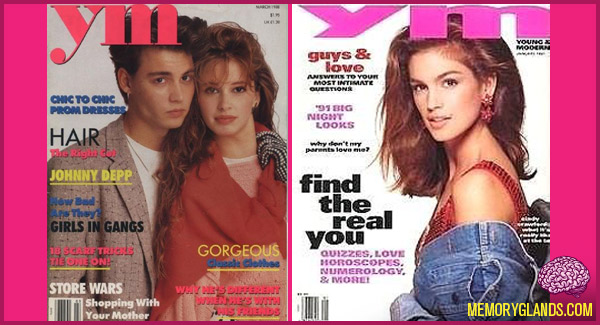
YM was an American teen magazine that began in 1932. It was published for 72 years and was the second-oldest girls’ magazine (the oldest being Seventeen) in the United States. YM got its start as two magazines in the 1930s—Compact, which was aimed at older teens, and Calling All Girls, which was intended for younger girls and pioneered the signature embarrassing-moments column, “Say Anything”. By the late 1960s, the publications merged into Young Miss, a small digest-sized mag. In the 1960s the size was increased and the 1980s saw still another title change (this time to Young & Modern) under Bonnie Fuller’s direction as editor-in-chief. The final title change came in 2000 (this time to Your Magazine), though the abbreviation “YM” was the title by which it was commonly referred. In early 2002, then Editor-in-Chief Christina Kelly announced that the magazine would no longer run articles about dieting. YM ceased publication in 2004, with the December–January issue featuring Usher. Subscribers received Teen Vogue subscriptions in replacement.
No Comments02.15.
School Pizza
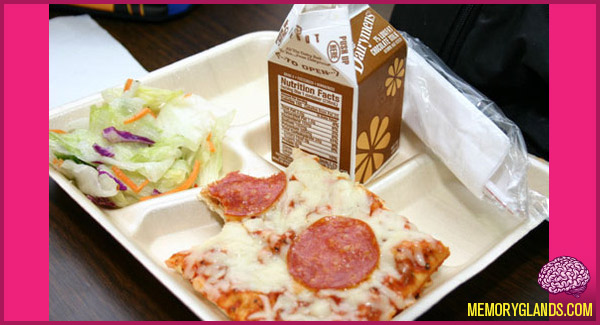
You never wanted to be the kid who got the school pizza. It hindsight it probably wasn’t TOOOOO terrible, but the smart kids knew to order pizza on Pizza Hut days…at least that’s what we had and this was during the time when Pizza Hut pizza was greasy and delicious.
15 Comments